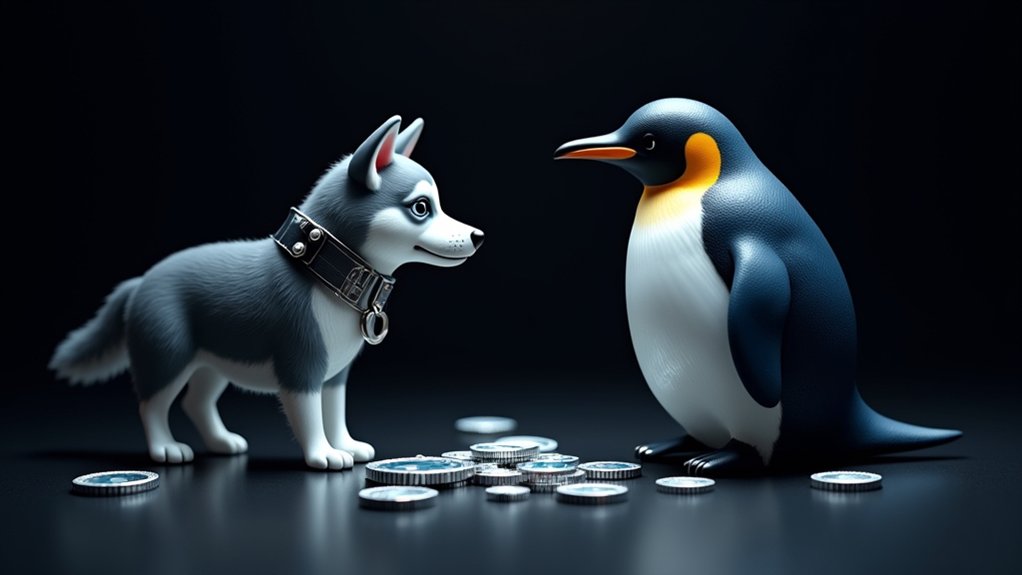

Why do crypto communities insist on masquerading as utopias of decentralization and inclusivity when, in reality, they often fall prey to superficial engagement and token gimmickry? Take Husky Inu and Pudgy Penguins—two communities that parade their strengths but reveal glaring contradictions upon scrutiny. Husky Inu touts its fully community-owned token with no premint or private sale, an admirable attempt at decentralized distribution, yet its success hinges heavily on a pre-launch fundraising spree amassing over $742,000, a figure that smacks of strategic hype more than organic growth. Their Earn App, designed to reward daily interactions, feels less like empowerment and more like gamified compliance, incentivizing participation through token drips rather than genuine commitment. Additionally, Husky Inu plans to implement a deflationary mechanism that uses proceeds for buyback and burn to create scarcity and support token value. Notably, Husky Inu ensures liquidity and tokens locked 100% for one year, which is presented as a safeguard for investors.
Crypto communities promise decentralization but often deliver token gimmicks and superficial engagement instead of true empowerment.
Conversely, Pudgy Penguins rides on nostalgia and exclusivity, leveraging its NFT pedigree to foster a collector base obsessed with floor prices and social clout. While they trumpet inclusivity, the reality is a gated community where holder-only events and merchandise create artificial scarcity, commodifying belonging and reducing participation to a transactional affair. Their reliance on social media contests and collaborations, while superficially engaging, often masks a core dependency on external validation rather than intrinsic community strength.
Both projects flaunt community voting and governance, yet these mechanisms often serve as performative gestures rather than substantive power shifts. Husky Inu’s deflationary tokenomics, with buy-back and burn schemes, appear designed to pump prices under the guise of value creation, while Pudgy Penguins’ gamification of NFT ownership risks trivializing engagement into mere entertainment.
Ultimately, the question isn’t which community commands power but how much of that power is illusory—cloaked in buzzwords and tokenomics yet lacking the transformative agency they so loudly proclaim. In the end, these crypto collectives resemble more a stage for spectacle than a genuine revolution in decentralized social order.