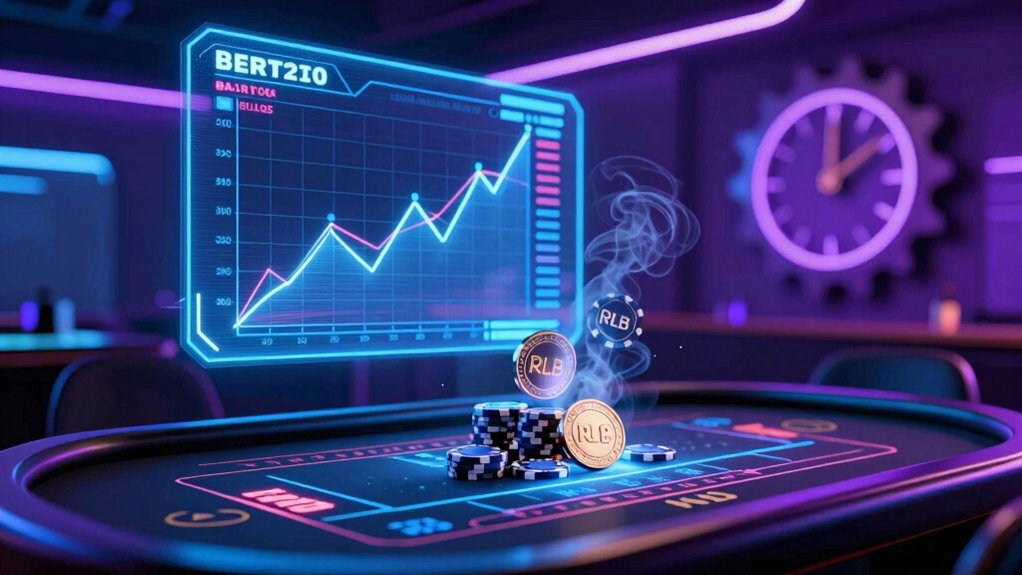

How does the complex interplay of tokenomics and user behavior influence the perceived scarcity and valuation dynamics of RLB, the native token of the Rollbot platform? At the core, the token’s capped maximum supply of 5 billion units establishes a baseline for scarcity, yet the dynamic mechanisms built into the ecosystem add layers that modulate circulating supply and, consequently, market valuation. The Rollbot protocol incorporates a nuanced supply reduction model that ties token burns directly to platform activity—most especially through lottery staking fees. A fixed fee of 0.20% charged per lottery entry allocates half toward permanent token burn, while the other half redistributes rewards among stakers, creating a continuous, demand-dependent burn that scales with user participation. This ongoing attrition contrasts with a one-time supply cut, as public claims regarding a “60% burn” describe cumulative, future-burn scenarios contingent on sustained activity and high staking levels, rather than an immediate supply contraction. Additionally, Rollbot holders can stake NFTs to earn a percentage of marketplace fees, which integrates another dimension of user engagement influencing token dynamics through marketplace profit-sharing. The burn mechanism functions as a form of supply shock, aimed at reducing overall supply and managing inflation.
Beyond burns, staking and multiplier mechanics further complicate the supply picture by temporarily locking tokens, thereby affecting circulating supply metrics during lottery rounds. These staking incentives encourage token-locking behavior, indirectly amplifying burn potential when tokens are eventually reintroduced into circulation through lottery participation. The initial token distribution, heavily weighted by airdrops to Rollbot NFT holders, introduced concentrated holdings, impacting early liquidity and distribution dynamics. Additionally, distinctions in how treasury and “hot” wallet holdings are classified by various analyses introduce variability in reported circulating supply figures, occasionally skewing market perceptions. The token’s use across multiple utility scopes such as casino games, sports wagering, futures trading, and the NFT marketplace further drives demand that interacts with these supply mechanics.
The utility-driven demand, spanning lottery entries, NFT-related multipliers, and ancillary platform activities such as casino bets and futures fees, perpetuates transactional requirements for RLB, thereby reinforcing burn events tied to usage intensity. Transparency tools, including live burn counters and dashboards, amplify perceptions of dwindling supply, potentially reinforcing speculative demand behaviors. However, liquidity concentration within treasury wallets implies that relatively small trade volumes can disproportionately affect price movements, complicating direct causal links between burn metrics and token valuation. In sum, RLB’s tokenomics reflect an engineered scarcity system dependent on user engagement and nuanced that supply statistics must be interpreted with care, acknowledging both technical mechanics and behavioral factors shaping valuation dynamics.