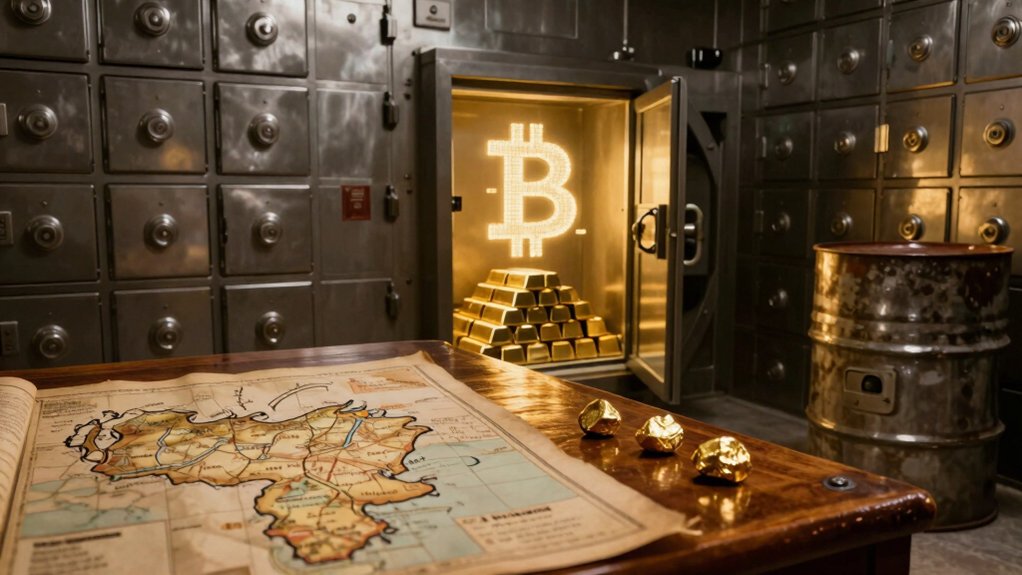

Although often overshadowed by more transparent institutional holders, Venezuela is now believed to possess a clandestine reserve of approximately 600,000 to 660,000 bitcoins, a quantity representing nearly 3% of the total circulating supply and valued in the vicinity of $60 to $67 billion at current market prices. This hoard rivals investors such as BlackRock and MicroStrategy, and especially exceeds the United States government’s reserve of 328,372 BTC. The origins of this accumulation trace back to 2018 when Venezuela began amassing bitcoin amid crippling hyperinflation and increasingly strict US sanctions. The strategy was designed to shield state wealth and circumvent traditional financial constraints, continuing robustly through 2025 via both commodity swaps and cryptocurrency settlements.
Central to Venezuela’s covert buildup was a series of gold-for-bitcoin transactions originating from the Orinoco Mining Arc, where tens of tons of gold were exchanged between 2018 and 2020. Roughly $2 billion in gold was converted at an average price of $5,000 per BTC, a tranche now valued near $36 billion under current market rates. Alongside this, the nation leveraged its oil exports through PDVSA, converting crude oil payments denominated in Tether (USDT) to bitcoin between 2023 and 2025. This oil-to-BTC conversion effectively bypassed exposure to the US dollar, further insulating Venezuela’s assets from imposed sanctions and securing a significant portion of the eventual bitcoin reserve. Although the exact existence of these bitcoins awaits on-chain verification, intelligence sources have affirmed their likely presence. Reports indicate these combined channels produced over 600,000 BTC.
Domestically, the government seized control of private mining operations, consolidating hardware and hashrate to produce a portion of the bitcoin stockpile, while shifting output from decentralized actors to state control. However, uncertainty remains regarding the exact on-chain verification of these holdings, as the estimate is primarily drawn from human intelligence rather than transparent blockchain data.
In January 2026, a US-led operation resulted in the arrest of President Nicolás Maduro, exposing the secret reserve but leaving questions about access to private keys unanswered. The interim government’s capacity to control or liquidate this cache remains unclear, posing geopolitical risks and potential volatility within the cryptocurrency markets. Should Venezuela opt to liquidate or even partially mobilize this hoard, analysts anticipate a substantial supply shock. Conversely, if the reserve remains dormant as a strategic asset, it could elevate bitcoin prices over the medium to long term by reducing available supply, fundamentally reshaping institutional strategies and market dynamics.